01
1. Discovery
Search systems first need a route to the URL: internal links, sitemaps and previously known references are common discovery mechanisms.

Understanding the sequence makes technical problems easier to diagnose. A URL can be discovered but not crawled, crawled but not rendered as expected, rendered but canonicalised elsewhere, or indexed but not retrieved for useful searches.
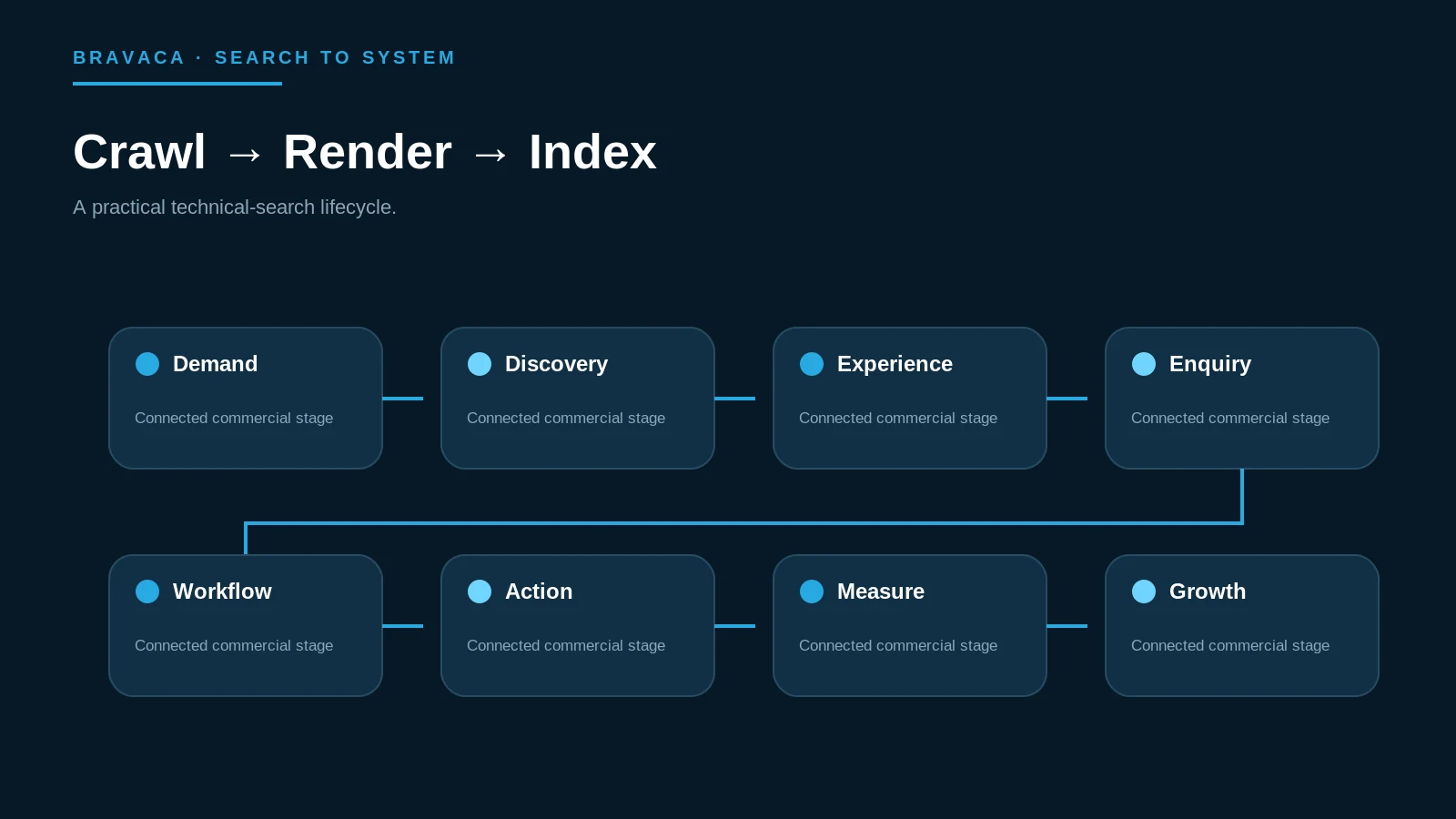
The crawl-to-index lifecycle used for technical diagnosis.
Each visual is selected for this page by meaning, not simply by keyword similarity.


Search systems first need a route to the URL: internal links, sitemaps and previously known references are common discovery mechanisms.
The server response, robots controls, redirects and URL behaviour determine what can be fetched and how confidently the URL can be understood.
Important content and links need to be available in the rendered page. Heavy client-side dependencies can make diagnosis harder even when a browser eventually shows the content.
Duplicate signals, canonicals, redirects and page similarity can affect which URL is selected. Indexing is not guaranteed simply because a URL returned 200.
Tell us what you are trying to improve. We will help define what should happen next.